Afghanistan, NATO, White Paper: the new trilogy of our future defence. A radical break that seems to have no other basis than a desire to close the Iraq dispute and fall in step with American policy. An explanation is needed as to why it is urgent to adopt a managerial mindset that mixes war and strategy, and whose failure in the Middle East is once again patently obvious.
A Low Point in Strategic Thinking
It has become a media cliché: although America is still the military superpower, it has to be admitted that it has a habit of losing its wars. This oxymoron doesn’t seem to shock its authors: even a five-year-old knows that when you lose, you aren’t the strongest. Never mind: defeated on the ground, America and its ethereal and managerial conception of war has nonetheless become the model to which our leaders are rallying; to the point of sending troops to a pointless battle, of rejoining an alliance that is coming to the end of its time, and of duplicating in a White Paper this woolly-minded concept of Transformation whose total failure needs no further demonstration.
Afghan Adventures
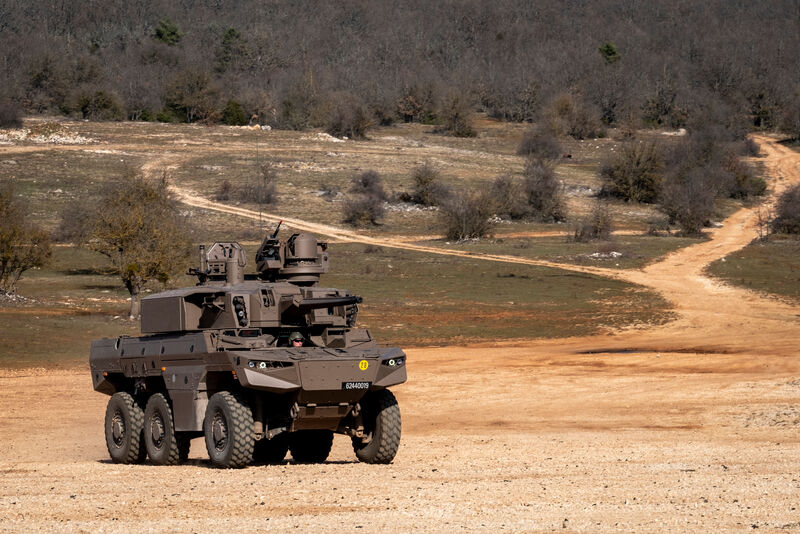
You don’t make war, you win it. Can NATO beat the Taliban? No! That idea has been written off; the word now is that we must avoid losing. This is what the French President said in Kabul in early 2008, and repeated three months later at the Bucharest summit: not exactly inspiring. If Afghanistan falls, we are told, Pakistan will also fall. There we have a clumsy recycling of the domino theory of the 1960s.
Obviously no Western general is going to repeat Joffre’s witticism after the Battle of the Marne, and that between allies it is a matter of passing the hot potato of a failure that was predictable from the very beginning.(1) Meanwhile we have moved on from Taliban raids to a guerrilla war of the maquis, where the counter-insurgency methods go back to the Challe Plan.(2) There are already more than 60,000 European and American troops on the ground, plus 10,000 mercenaries and an Afghan army of 35,000. NATO has a crushing superiority over the rebellion, both qualitatively and quantitatively. All for nothing. The strategy is still, nonetheless, to send ever more troops and resources. The ‘Surge’ is the sole concept of the Americans, unable to progress beyond McNamara-style accounting. In a confidential memo dated 16 October 2003, the former Defence Secretary, Donald Rumsfeld asked, ‘are we killing more terrorists than the Pakistani madrassas can train?’ Forty years after Vietnam, nothing has changed, and nothing will ever change in the Pentagon’s way of thinking. A nation whose skirmishes with the British were a failure, and which owes its independence to the regiments and the fleet of the King of France, has become definitively conditioned to the notion that battles are only won by the big battalions.
Il reste 87 % de l'article à lire